Crazing is a network of fine cracks running through the glaze layer only. The clay underneath is sound. It happens because the glaze, as it cools, shrinks more than the clay it is sitting on, so it ends up stretched tight over the pot and eventually gives.
On a Goryeo celadon or a Song dynasty tea bowl that crackle was often the point, and potters learned to make it on purpose. On a mug you want to sell it is a fault: the cracks hold tea, the glaze is weaker, and on earthenware the body underneath can take on water.
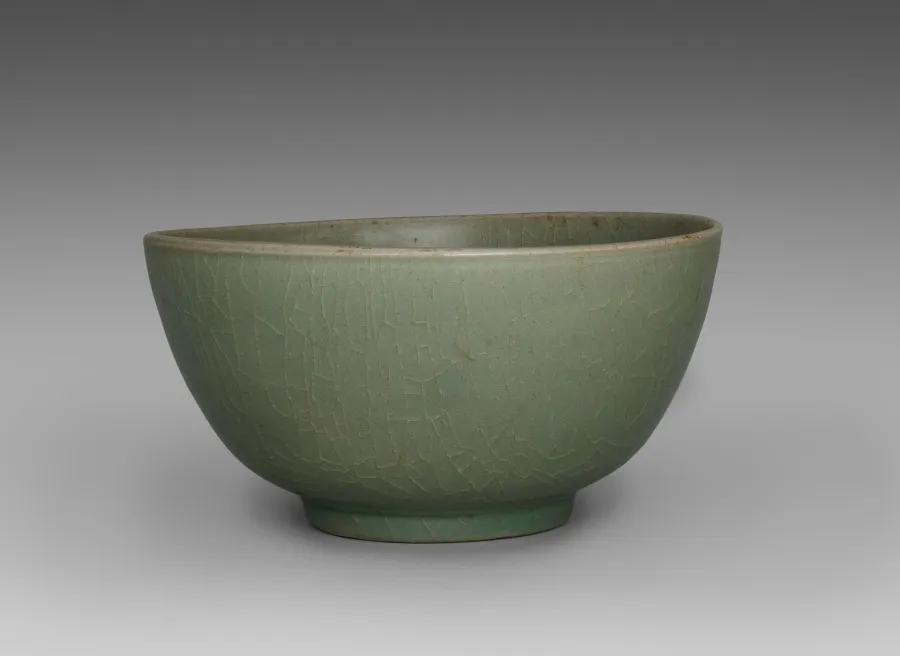
Is it crazing, or something else?
Three faults get mixed up all the time because they all involve cracks or gaps in the surface. Only one of them is in the glaze alone.
Tell them apart
Look at the pot in raking light, and run a fingernail across the crack.
A network of fine lines, often all over, in the glaze only. The fingernail barely catches. Lines may keep appearing for weeks. The pot still rings when tapped.
One or a few long, clean cracks that go right through the body, often from rim to foot or across the base. The pot clunks instead of ringing. Usually a cooling problem around 573 °C, where quartz changes form.
No cracks. The glaze has pulled back into islands and beads, leaving bare clay between them. Usually dust, oil or a too-thick coat before firing.
Why it happens
Every material expands when heated and shrinks when cooled, and each one does it by a different amount. Potters call that amount the coefficient of thermal expansion. When the kiln cools, the glaze and the clay body both shrink. If the glaze wants to shrink more than the body, the body holds it stretched, in tension, and glass is weak in tension. It cracks.
That gives you the two levers. You can lower the expansion of the glaze, or you can raise the expansion of the body so they match better. Almost every fix below is one of those two.
| Likely cause | What to try |
|---|---|
| Glaze is high in sodium and potassium (lots of feldspar, nepheline syenite or a soft frit). These expand the most. | Add silica in 5 % steps, or swap part of the alkali flux for a lower-expansion one. A little boron frit or a touch of lithium (from spodumene or petalite) both drop expansion fast. |
| Glaze is low in silica or alumina, so there is not enough glass-former to stiffen it. | Same answer: a silica line blend is the first test every time. |
| Body is underfired, so it never developed the cristobalite and glassy phase that give it its own expansion. | Check your cones, not just the controller. Fire the body to its proper maturity; a half cone can matter. |
| Glaze applied very thick. A thick coat is under more stress than a thin one. | Thin the glaze or dip for less time. Crazing that only shows where the glaze pooled is this. |
| Earthenware left porous. Moisture gets in later, the body swells slightly, and the glaze cracks weeks after firing. | Delayed crazing on low fire is almost always this. Fire the body higher if the clay allows, or choose a glaze made for it. |
The one test to run next
Mix your glaze five ways and fire the tiles together on the same shelf. Whichever tile stops crazing with the least added silica is your new recipe. If none of them stop, the body is the problem, not the glaze.
Base glaze   100  100  100  100  100
Silica 325    +0   +5  +10  +15  +20
Fire to      cone 6, cool normally
Check        out of kiln, again at 7 days
Glazes in the library that like to craze
Feldspathic glazes with little silica are the usual suspects. In the library, Longquan celadon cone 10 R and Shino cone 10 R both carry a note about it, and each glaze page says which clay bodies it has been crack-free on.
Log the fix. If you record what you changed and the clay body in the app, this page will show your own result next to ours.
Open the app